Showing posts with label Fat. Show all posts

Tuesday, September 8, 2015

Freshman 15: Fact or Fiction

Ahh tis’ that time of year again, back to school! How can I tell you ask? Well between the backed up traffic/lack of parking spots on campus, dozens of annoying banks trying to get me to sign up for a credit card, and freshmen walking around like lost puppies, sometimes with tears in their eyes, I think it’s a pretty safe bet. With the return of freshmen, comes the threat of the mythical freshman 15. However, just because you may not be a freshman, you are not exempt from weight gain. Quite frankly,  it only gets more difficult to avoid weight gain from here on out. Welcome to the process of aging my friends, where your metabolism starts to slow down and you can no longer eat or drink whatever you want without gaining weight! First, let me first address this whole “freshman 15” thing.

Freshman 15: Fact or Fiction
The freshman 15 is in most cases fiction. It is fiction in that most first year college students gain on average around five pounds or so. This is good news I suppose, but for those of you have never taken a stats class, this is just an average and there are outliers to this. Some people gain more, some people gain less, and some people just don’t gain anything.  

Well Beth, what causes weight gain?
Scientifically speaking, eating more calories than you burn.  Is there any specific food(s) that make you fat such as fat or carbs or sugar? Without getting too nerdy on you, the answer is no. Eating fat doesn’t make you fat in that singing Beyonce in your car does not in fact make you Beyonce.


Carbs and sugar, are not necessarily bad and are part of a balanced diet. What is the secret you ask? Everything in moderation. For example, I love pizza and COULD eat it every day in the dining hall, but I don’t.  Most people tend to over do it on fat, sugar, and carbs, which leads to weight gain. 

The part where weight gain gets a little more intricate is the part where your body burns calories and all of the factors that can affect that. Without getting into too much detail, some of these factors include: age, sex, muscle mass, stress, etc. I'll save those for another blog though.

How can I avoid weight gain?
It is pretty simple actually. Eat right and exercise--No need for some magical (and expensive) diet pill, detoxes, or cleanses. I don’t know about you, but I am no Kanye…


Breaking it down
The freshman 15 is a myth, but it is not as mythical as big foot or aliens, so keep that in mind. I mean weight gain during freshmen year may or may not have even happened to yours truly.

Gasp! I know right, you probably don’t want to think about your nutrition hero like that, but I’m just going to be real with you; I put my pants on one leg at a time just like everybody else J Well if you will excuse me, I need to go move my car (Note: I may have a touch of road rage)...


Until next time!

Keep it Fresh,
Keep it Green,


Beth

Tuesday, May 19, 2015

America & Burgers

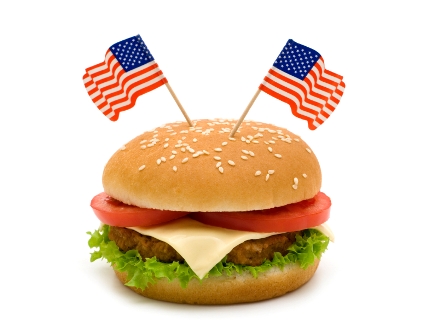
With  Memorial Day and summer on the horizon, grills everywhere will come to life and there is nothing more American than burgers. In fact I googled American food and this was one of the first images that popped up...


For this blog, I wanted to talk about one of America’s favorite thing to grill, burgers. No, I am not going to talk about who has a better burger McDonald’s or Wendy’s, but rather the type of burger; beef, turkey, veggie, etc.

Type of burgers
  • Beef: Red meat gets a bad rap for being fatty, which isn't undeserved in most cases, however you can get leaner varieties if you are really craving some red meat.  The most common type of ground beef used for burgers is 80/20, meaning 80% lean meat and 20% fat (by weight, not calories).  However, you can purchase leaner options such as 90/10 to make your burger a little healthier.
  • Turkey: Yes, turkey is leaner than beef, meaning is it lower in calories and fat. However, if you are not paying attention to the type of ground turkey you are purchasing, this may not always be the case.  Often ground turkey contains more of the darker meat and skin, which bumps up the fat content, so aim for the leaner variety. 
  • Veggie: These are almost always lower in calories, fat and protein compared to their meat counterparts, and higher fiber. (Side note: Americans get plenty of protein so don’t use this as an excuse to not eat veggie burgers) Also, ones purchased from the store, can be high in sodium and have a long list of ingredients that I cannot pronounce. If you want to avoid that (and are ambitious), try making your own. 

Toppings
Now that you have the 411 on some of the types of burgers, let’s look at what you are putting on your masterpiece.
  • Bun/Bread: Of course what type of burger you get may be completed negated when you use doughnuts instead of a bun…

My inner dietitian wants me to tell you to opt for a whole wheat or whole grain bun. Surprise, surprise right? If you really just want to lighten up your burger, you can either skip the bun entirely or go naked and wrap your burger in a big piece of lettuce. (Note: I did not make that up, it is a real thing.)
  • Cheese: Who doesn't love cheese?!? However, cheese does provide a good bit of calories, so you don’t want to get to carried away with it. 
Tip: One thing you could try is using sliced avocado instead. The creaminess of the avocado mimics that of cheese; Just a thought.
  • Sauces: The healthfulness of sauces is all over the place. Condiments such as mustard, ketchup, and hot sauce are fairly harmless, but then you have mayo and aiolis that can sneak in  more calories than you realize. Simple rule of thumb, your creamier sauces will have more calories so don't go to crazy with them.
  • Vegetables: Load up on these given that they are not fried.
  • More meat/protein: This part is where a lot of people really get tripped up. Yes this includes your beloved bacon, but I have also seen burgers with a fried egg, BBQ pork, chili, etc, on them as well. Not really sure what to say about this as a vegetarian other than additional meat/protein is going to punch in more calories so make sure it’s worth it (tastes good and is your cheat day).

Sides
When I say peanut butter, what do you think of?


I would hope that you would think of jelly, if not you are un-American. Anyways, when I say burgers you probably think of fries; am I right? I mean who honestly wants to eat salad with a burger?!?!  Not me, and I am even a Dietitian AND a vegetarian, which is practically a rabbit right ?!? Now, I don’t care if you call them French fries or Freedom fries…


but fries in general are not the healthiest for you, yes, even if they are sweet potato fries. It’s not that regular potatoes, or sweet potatoes for that matter, are bad for you. To make fries, they are cut up and fried in very hot oil or fat. Don’t get me wrong, French/freedom fries are delicious, but not something you should probably eat every day. Maybe try grilling some veggies or just be like Beyonce and go for the watermelon...


Breaking it down
At the end of the day, no matter what type of burger you chose, you are still eating a burger. Just because a veggie burger has the word veggie in its name does not automatically make it healthier. If you are watching your calories a little more closely, it might be a good idea to switch to a turkey burger. Don't like turkey burgers? That's ok, you can have your beef, just don't eat them everyday. Burgers aren't necessarily “bad” for you, but be mindful of both what you put on it and what you have with it.


My nutrition mantra is everything in moderation. Well I am off to go find some freedom to put on my burger...


Until next time!

Keep it Fresh,
Keep it Green,


Beth

Tuesday, April 7, 2015

Nuts!

I was having a hard time trying to think up what I was going to blog about this week and then I serendipitously got a text from my mother and it all just came together! Nuts! To be fair, the apple doesn’t fall far from the tree and the stuff my brothers and I did growing up was enough to drive anyone crazy. Not sure about you all, but we enjoyed playing Smart Mop and pouring all sorts of stuff on the floor to clean up…except for we didn’t have the Smart Mop...so it didn’t work out so well.


Anyways, I thought I would take this week’s blog to capitalize on this thought and blog about nuts.
I am going to go out on a limb here and assume that you all know what a nut is and that you can probably name a few of them off the top off your head. What most people probably don’t know is some of the health benefits of nuts, so I will help you out.

What’s so special about nuts?
As a vegetarian one of the questions that I get without fail, is how I get enough protein. Well it just so turns out that nuts are a great source of protein! In addition, depending on the nut, they are good sources of certain micronutrients (vitamins and minerals). For example, Brazil nuts contain an entire day’s worth of selenium in just one nut. Since there are a ton of different types of nuts, I am just going to leave this little infographic here…


One of the other points of interest with nuts, is that they do contain fat...

Now before you swear off nuts just because they contain fat, the type of fat they contain is a good type of fat. Some nuts, such as almonds and walnuts, are actually even a good source of omega-3s (which yes, is a good fat).

Wait…are they going to make me fat?!?
No. Eating too many calories and not exercising makes you fat.  Yes, you could gain weight by eat 10,000 calories a day of nuts, but you could also do so by eating 10,000 calories a day of carrots (unless you are an ultra-marathon runner).  If you want more info on this, check out this previous blog post of mine on how eating fat does not make you fat

What about flavored nuts?
They can be delicious, but watch out for high amounts of sodium and added sugar.

How can I incorporate them into my diet?
Now, I am not really the type to wake up early to allow myself time to sit and eat breakfast in my house, so I usually end up grabbing something to eat in the car. That being said, I usually keep a bag/huge container of trail mix in my car, which is chock full of nuts.  Other ways include adding them to cereal, yogurt, salads, pasta dishes, Asian dishes, etc. Yes, you could put them in desserts, such as cookies, to make them a little bit healthier, but at the end of the day a cookie is still a cookie.  

Breaking it down
Nuts are healthy. They are a good source of protein and other vitamins and minerals. They do contain fat (the good fat)...


so don’t eat a whole five pound bag in one sitting. Well I am off to think up new ways to irritate my mother. Until next time!

Keep it Fresh,
Keep it Green,


Beth

Tuesday, March 31, 2015

Eggs

Now I know TBT usually refers to throwback Thursday but I am going to bend the rules a little bit because it is Tuesday. For this week's blog, I wanted to throw it back to a pervious blog that I did on eggs. I mean with easter approaching, it just makes sense to refresh everyone's memory on eggs. Without further ado, I give you Beth's Egg Manifesto!

With this past weekend being Easter, the question of, “which is better for me egg whites or eggs,” emerged just as I was entering my happy place enjoying the delightful goodness that is Reese’s peanut butter eggs. I know what you are thinking, “GASP! You are a dietitian and you eat candy!” Yes, I eat candy, preferably dark chocolate, but I make sure its in the shape of fruits and veggies to make myself feel better about it. Anyways, back to the question at hand. Obviously, the answer here is false, Reese’s peanut butter eggs are better for you. 


I suppose there is no time like the present to talk about eggs. Now eggs tend to get a bad rap mainly because of their fat and cholesterol content. Case in point...


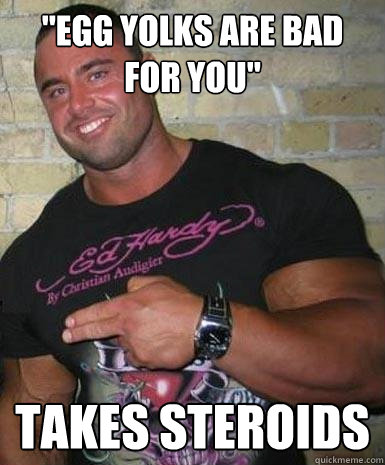
Headlines like this just make me roll my eyes. I mean come on! Eggs are almost as bad as smoking?!? Well, then I should just light up then, right? Then there is this guy...


You know what is bad for you? Steroids. Despite these "credible" sources, many leading health agencies can vouch for me on this one; eggs can be part of a healthy diet.

Types of Eggs
While Easter may have us thinking of Reese’s eggs, Snickers eggs, Cadbury eggs, and any other candy filled chocolate egg you can imagine, that’s not what I am going to write about today. While there are actually quite a few different types of animal eggs that you can eat, such as chicken, duck, quail, ostrich, and fish, for all purposes pertaining to this blog we are going to talk about chicken eggs.

Anatomy of an Egg
Since this is not a science class, I am going to simplify the anatomy of an egg for you to focus on what is pertinent for this topic. The three parts I am going to cover are…
Shell: I would hope that you could identify what part of the egg that the shell is.
White: The clear-ish liquid that surrounds the yolk, comprised mostly of protein and water.
Yolk: The yolk is the yellow part of the egg where all of the fat and cholesterol is, half of the protein is, and where other important vitamins and minerals are.

Egg Whites v. Whole Eggs
The ever so incredible edible egg is a great source of protein and various vitamins and minerals, but what happens when we separate the whites from the yolk, thus giving you egg whites? Below I have a chart for you that outlines the main differences between the two for you. (Info based on a large egg)

Whole Egg
Egg White
Calories
72
17
Protein
6
3
Fat
5
0.6
Cholesterol
186
0

Other things that I noticed while looking this up but did not put on the chart to spare you having to look at any more of that number jibberish include: (All of these are higher in whole eggs)
• Calcium: helps your bones and muscles
• Choline: helps support the nervous system and important for pregnant women
• Fe: helps with fatigue
• Folate: important for pregnant women
• Vit A: helps your eyes
• Vit D: helps with bone health and mood
• Zinc: helps your immune system and wound healing
So you may have noticed that egg whites are a lot lower in fat and cholesterol. Does that mean we should all switch to egg whites since fat and cholesterol are "bad" for our heart? No. Eating foods with cholesterol does not raise your blood cholesterol. Additionally, research is starting to suggest that fat not only makes food taste good, but also helps with satiety.

What about Egg Beaters?
Egg Beaters and egg whites are essentially the same thing. The only difference is that Egg Beaters have a ton of things added to them such as coloring, thickeners, and some vitamins and minerals. 

“What about the color of eggs”
The color of the egg has no effect on the nutritional value of the egg or on the taste of the egg. Dorky fact of the day #1: You can tell what color of egg a chicken will produce by the color of its ear lobe. Dorky fact of the day #2: Chickens have ear lobes. For example, a chicken with a blue ear lobe will produce blue eggs. Dorky fact of the day #3: Yes, blue chicken eggs do exist. So next time you are at the store, don’t be duped into paying $1 more or whatever more they charge for the “healthier” brown eggs.

“What about the USDA Grading?”
The USDA grades eggs by the interior quality of an egg and the appearance and condition of the eggshell. The higher the letter (AA, A, and B) the better quality egg you are getting. Does this have any relevant bearing on nutrition? Nope. The size of the egg (Jumbo, Extra Large, Large, Medium, Small, and Peewee) does have some impact on the nutrition, but have you ever seen a weight loss tip telling you to select a smaller egg size? My guess would be no since there is not a huge difference in calories, protein, fat, etc.

Egg Buzz Words
Cage Free: This just means that the hen has not been confined to a cage for its whole life. They are able to walk around and stretch out, but this does not mean that they necessarily are outside chatting it up with Wilbur.
 

Free Range: This takes cage free a step further, by providing them access to the outdoors. To be labeled as free range, the USDA stipulates that the hens must be given continuous access to the outdoors. Yes, the hens can eat bugs and grass like they would in they would in the wild, but this does not mean that they are not fed grain. 
Omega-3: Usually this just means that the hens were fed grains/feed with omega-3s in them. Does this mean the resulting egg is magically super high in omega-3s? Does anybody love Kanye more than Kanye? No.

Organic: This just means that the hens were fed an organic feed, were not given antibiotics or growth hormones, lived in cage free environment, and had access to the outdoors. 

Bottom Line
Are you pregnant or breastfeeding? If you answered yes, then you should probably go for whole eggs. If you are unsure if you are pregnant or breastfeeding, you should probably figure that out before worrying about eggs. Breakfast wise, eggs are better than that pop tart, muffin, and sugar cereal you are eating. In the battle of whole eggs versus egg whites my thoughts are this.

1. Eggs contain fat and cholesterol just like every other animal product, so I am not so sure why eggs are being stigmatized to the extent that they are. Ounce for ounce, chicken contains more calories and fat than eggs.
2. Everybody needs fat in their diet, would you rather it come from a doughnut or eggs?
3. Eggs are not what caused the obesity epidemic.
4. Does anyone actually like the taste of egg whites over a whole egg?

If you are concerned with animal cruelty then go for free range and/or organic eggs, but be advised that does not ensure the hens have not faced some form of animal cruelty. If you are really concerned about animal cruelty, go to your local farmers market, get fresh eggs, and shake the hand of the person who raised the hens themselves. Now if you will excuse me, I have some Reese’s peanut butter eggs to tend to. Until next time!

Keep it Fresh,
Keep it Green,

Beth


Wednesday, February 11, 2015

Bless Your Heart: Heart Healthy Foods


February is National Heart Awareness Month, which is why you may have noticed these red dresses all around campus and Charlotte, that is if you haven’t been in a daze due to your seasonal depression…


If you were like me and were wondering why we should only go red for women and not men, it is because heart disease is the number one killer of women in the U.S., not because men don’t have hearts.

What is heart disease?
The term “heart disease” refers to several types of heart conditions. The most common type is coronary heart disease, which can lead to a heart attack, angina (chest pain), heart failure, and death. The only good thing about heart disease is that it is both preventable and controllable. I guess maybe the second good thing is that heart disease, unlike ebola, it is not contagious so don’t sweat it the next time the person on the bus next to you coughs on you; you will be fine…in terms of not catching heart disease anyways.

How can I prevent heart disease?
I am sure that is the burning question on your mind right now…well unless you are a fellow Kardashian fan such as myself.  Anyways, I can only help you out with the heart disease question. Now prepare yourself for this “groundbreaking” news on how you can prevent heart disease. Are you ready for it?!? Here goes…eat healthy, exercise, and avoiding tobacco products! Mind blown?


Ok so probably not, but you may be wondering what foods you can eat to help out the old ticker. Well, it is your lucky day!

Heart Healthy Foods…
Contrary to popular belief, there is more to this than just eating your fruits and vegetables. Some of the qualities that make food heart healthy include: low in saturated fat, trans fat, cholesterol, and salt/sodium. Also, foods high in fiber, antioxidants, and omega-3s are good for the heart as well.

…In Lay Terms
Now I don’t expect most people to automatically know what foods to eat based on the above paragraph so let me lay it out for you.
  • Salmon and Tuna: Good source of omega-3s and lower in saturated fat than red meat. 
  • Chicken: If you are going to have meat and are not fond of seafood, you could swap out red meat for chicken. Chicken is leaner, containing less fat than red meat.
  • Legumes (aka beans):If you wanted to really take it to heart (yes, corny pun I know) you could swap meat for legumes, which contain no fat and are high in fiber. 
  • Whole Grains: Oatmeal, whole wheat bread, whole-wheat pasta, brown rice, quinoa, etc. Whole grains are a good source of fiber, which helps the old ticker deal with cholesterol.
  • Fruits & Vegetables: This shouldn’t be much of a shocker to you. Fruits and vegetables are a good source of fiber, vitamins, minerals, and antioxidants. With the exception of the avocado, they contain no fat. . Yes avocados do contain fat, but it is the good type of fat and packs some omega-3s.
  • Nuts & Seeds: Nuts, especially walnuts and almonds, are a good source of fiber, protein, and omega-3s. Side bar: Flax seeds do contain omega-3s but your body cannot digest the seed (read: you do not absorb any of the omega-3s) so make sure you grind them.
Foods to Avoid
  • Salty Foods: Processed foods, deli meats, canned vegetables and soups, frozen meals, and pizza are just a few of the usual suspects that contain a lot of sodium, which can increase your blood pressure.
  • Red Meat: Red meat is higher in saturated fat and cholesterol so opt for seafood or poultry. Perhaps you could even be a “hippy” for a meal and skip the meat!
  • Alcohol: Not only can alcohol lead to poor food (and life) decisions, but can also increase your blood pressure, which makes your heart work a little harder
  • Caffeine: Have you ever downed one too many cups of coffee, espresso, or energy drinks and started having chest pains, making you feel like your heart is going to beat out of your chest? Yeah, that’s not good. Needless to say lots of caffeine is not the best thing for your heart.
“I read that chocolate is good for your heart”
Before you dig into that chocolate cake or candy bar, let me enlighten you. While there have been some recent studies that have shown benefits to eating chocolate and heart health, it is not that simple. To start with, it is not just any type of chocolate, but dark chocolate with about 70% cocoa content. The cocoa adds more antioxidants, which are the main players in chocolate that benefits the heart. You know what else is high in antioxidants? Fruits and vegetables. Anyways, chocolate, even dark chocolate, does contain sugar and fat so it is best to consume in moderation.


“What about olive oil?”
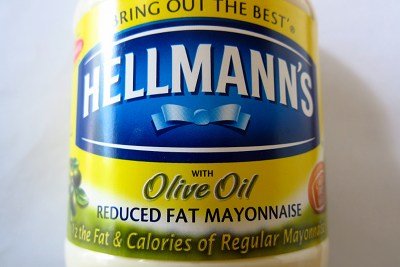
Olive oil is good for your heart in that it contains the good type of fat and omega-3s. Does that mean you should add a ton of it to whatever dish you are making? No! Along those same lines, just because olive oil is added to something does not make that product any better/healthier. Case in point (see below): Yes, this mayonnaise has olive oil in it but it is still mayonnaise, which is high in fat (not the good kind of fat either).


Until next time! Oh and…


Keep it Fresh,
Keep it Green,

Beth