February is National Heart Awareness Month, which is why you may have noticed these red dresses all around campus and Charlotte, that is if you haven’t been in a daze due to your seasonal depression…

If you were like me and were wondering why we should only go
red for women and not men, it is because heart disease is the number one killer
of women in the U.S., not because men don’t have hearts.
What is heart disease?
The term “heart disease” refers to several types of heart conditions. The most common type is coronary heart disease, which can lead to a heart attack, angina (chest pain), heart failure, and death. The only good thing about heart disease is that it is both preventable and controllable. I guess maybe the second good thing is that heart disease, unlike ebola, it is not contagious so don’t sweat it the next time the person on the bus next to you coughs on you; you will be fine…in terms of not catching heart disease anyways.
How can I prevent
heart disease?
I am sure that is the burning question on your mind right now…well unless you are a fellow Kardashian fan such as myself. Anyways, I can only help you out with the heart disease question. Now prepare yourself for this “groundbreaking” news on how you can prevent heart disease. Are you ready for it?!? Here goes…eat healthy, exercise, and avoiding tobacco products! Mind blown?
I am sure that is the burning question on your mind right now…well unless you are a fellow Kardashian fan such as myself. Anyways, I can only help you out with the heart disease question. Now prepare yourself for this “groundbreaking” news on how you can prevent heart disease. Are you ready for it?!? Here goes…eat healthy, exercise, and avoiding tobacco products! Mind blown?

Ok so probably not, but you may be wondering what foods you
can eat to help out the old ticker. Well, it is your lucky day!
Heart Healthy Foods…
Contrary to popular belief, there is more to this than just eating your fruits and vegetables. Some of the qualities that make food heart healthy include: low in saturated fat, trans fat, cholesterol, and salt/sodium. Also, foods high in fiber, antioxidants, and omega-3s are good for the heart as well.
Contrary to popular belief, there is more to this than just eating your fruits and vegetables. Some of the qualities that make food heart healthy include: low in saturated fat, trans fat, cholesterol, and salt/sodium. Also, foods high in fiber, antioxidants, and omega-3s are good for the heart as well.
…In Lay Terms
Now I don’t expect most people to automatically know what
foods to eat based on the above paragraph so let me lay it out for you.
- Salmon and Tuna: Good source of omega-3s and lower in saturated fat than red meat.
- Chicken: If you are going to have meat and are not fond of seafood, you could swap out red meat for chicken. Chicken is leaner, containing less fat than red meat.
- Legumes (aka beans):If you wanted to really take it to heart (yes, corny pun I know) you could swap meat for legumes, which contain no fat and are high in fiber.
- Whole Grains: Oatmeal, whole wheat bread, whole-wheat pasta, brown rice, quinoa, etc. Whole grains are a good source of fiber, which helps the old ticker deal with cholesterol.
- Fruits & Vegetables: This shouldn’t be much of a shocker to you. Fruits and vegetables are a good source of fiber, vitamins, minerals, and antioxidants. With the exception of the avocado, they contain no fat. . Yes avocados do contain fat, but it is the good type of fat and packs some omega-3s.
- Nuts & Seeds: Nuts, especially walnuts and almonds, are a good source of fiber, protein, and omega-3s. Side bar: Flax seeds do contain omega-3s but your body cannot digest the seed (read: you do not absorb any of the omega-3s) so make sure you grind them.
Foods to Avoid
- Salty Foods: Processed foods, deli meats, canned vegetables and soups, frozen meals, and pizza are just a few of the usual suspects that contain a lot of sodium, which can increase your blood pressure.
- Red Meat: Red meat is higher in saturated fat and cholesterol so opt for seafood or poultry. Perhaps you could even be a “hippy” for a meal and skip the meat!
- Alcohol: Not only can alcohol lead to poor food (and life) decisions, but can also increase your blood pressure, which makes your heart work a little harder
- Caffeine: Have you ever downed one too many cups of coffee, espresso, or energy drinks and started having chest pains, making you feel like your heart is going to beat out of your chest? Yeah, that’s not good. Needless to say lots of caffeine is not the best thing for your heart.
“I read that
chocolate is good for your heart”
Before you dig into that chocolate cake or candy bar, let me enlighten you. While there have been some recent studies that have shown benefits to eating chocolate and heart health, it is not that simple. To start with, it is not just any type of chocolate, but dark chocolate with about 70% cocoa content. The cocoa adds more antioxidants, which are the main players in chocolate that benefits the heart. You know what else is high in antioxidants? Fruits and vegetables. Anyways, chocolate, even dark chocolate, does contain sugar and fat so it is best to consume in moderation.
Before you dig into that chocolate cake or candy bar, let me enlighten you. While there have been some recent studies that have shown benefits to eating chocolate and heart health, it is not that simple. To start with, it is not just any type of chocolate, but dark chocolate with about 70% cocoa content. The cocoa adds more antioxidants, which are the main players in chocolate that benefits the heart. You know what else is high in antioxidants? Fruits and vegetables. Anyways, chocolate, even dark chocolate, does contain sugar and fat so it is best to consume in moderation.
“What about olive
oil?”
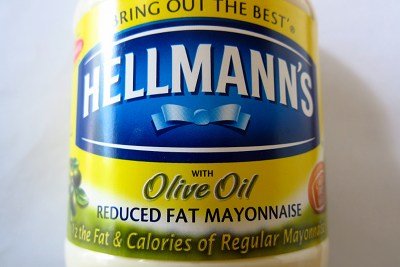
Olive oil is good for your heart in that it contains the good type of fat and omega-3s. Does that mean you should add a ton of it to whatever dish you are making? No! Along those same lines, just because olive oil is added to something does not make that product any better/healthier. Case in point (see below): Yes, this mayonnaise has olive oil in it but it is still mayonnaise, which is high in fat (not the good kind of fat either).
Olive oil is good for your heart in that it contains the good type of fat and omega-3s. Does that mean you should add a ton of it to whatever dish you are making? No! Along those same lines, just because olive oil is added to something does not make that product any better/healthier. Case in point (see below): Yes, this mayonnaise has olive oil in it but it is still mayonnaise, which is high in fat (not the good kind of fat either).
Until next time! Oh and…

Keep it Fresh,
Keep it Green,
Keep it Green,
Beth